
Affiliations & Recognition
Houston Trial Lawyers Association
State Bar of Texas
Texas Trial Lawyers Association
Super Lawyers Rising Stars
Houston Food Allergy Litigation Attorney
A severe allergic reaction turns an ordinary meal into an emergency room visit. If you or your child went into anaphylaxis after eating at a restaurant or opening a packaged product, Texas law may allow you to recover compensation for the medical costs and lost income that followed. Most food allergy cases in Houston are filed in the Harris County civil courts, and they rise or fall on one question: what did the restaurant, manufacturer, or grocer know about the allergen, and what did it tell you?
Pulkit Moudgil of The Moudgil Law Firm handles food allergy negligence and product liability claims for injured people across Harris County. He has represented both plaintiffs and defendants in litigation firms and knows how restaurant chains and food manufacturers build their defenses before a claim is ever filed.
According to the Centers for Disease Control and Prevention, roughly 6% of U.S. adults and children have a food allergy, so allergen errors in commercial kitchens and on product labels affect a large share of diners. As a Houston personal injury law firm, our team investigates kitchen practices, supplier records, and labeling decisions through our food allergy negligence practice.
This guide explains what food allergy litigation is, what causes these injuries, filing deadlines, and who can be held liable under Texas law. Call The Moudgil Law Firm at (832) 476-3209 for a free consultation.
What Is a Food Allergy Claim?
A food allergy claim is a civil claim brought by a person who suffered an allergic reaction because a food business failed to disclose, remove, or accurately label an allergen. Unlike food poisoning, which involves spoiled or bacteria-contaminated food, a food allergy case involves food that was safe for the general public but dangerous to you because of a known allergen such as peanuts, tree nuts, shellfish, milk, eggs, soy, wheat, fish, or sesame.
Against a restaurant, the claim falls under ordinary negligence: staff owed you reasonable care and breached it. Against a manufacturer, a claim involving a defective or inadequate warning or label may fall under Texas products liability law. Nonmanufacturing sellers, including some distributors, are typically protected from liability unless an exception under Texas law applies.
$27M
Recovered for Clients
5.0 
218 Google Reviews
$0
Unless We Win
“Pulkit and his team made my accident claim a smooth and stress free experience.”
“Pulkit Moudgil and the team he has is absolutely top tier!”
“They drive my case with on time information and pretty good communication. “
“This is an amazing law firm and attorney, wish I could give more than 5 stars.”
“Highly recommend this firm! They worked really hard on case.”
“Highly recommend the Moudgil Injury Law Firm. Very professional and great with communication.”
Free Case Evaluation
No cost, no obligation.
The insurance company already has a lawyer. Now you do too.
FREE CASE EVALUATION · NO FEE UNLESS WE WIN

“I’m extremely happy with this lawyer; they were very attentive, and thank God everything was excellent.”
“The whole process was smooth, I was never kept in the dark, communication was on point and I got the money I deserved!”
“Great lawfirm! They helped me so much with my accident and injury claim. I highly recommend them!!!”
“From coordinating my medical treatment to addressing the damage to my vehicle, they made sure every detail was handled thoroughly.”
Protect Your Claim Today
Start with a free case review.
What Causes Food Allergy Injuries in Houston?
Food allergy reactions in commercial settings can result from communication, preparation, handling, or labeling failures rather than the food itself being spoiled. A server forgets to relay an allergy note to the kitchen. A cook uses the same fryer for shrimp and french fries. A manufacturer changes a supplier and the ingredient panel is never updated.
Houston food establishments are subject to state and local food-safety requirements. Texas law requires food-service establishments to display food-allergen awareness information for employees, and the City of Houston’s current food-safety framework incorporates the Texas Food Establishment Rules and FDA Food Code.
Key Takeaway: Most Houston food allergy cases stem from undisclosed allergens, kitchen cross-contact, or mislabeled packaging rather than the food itself being spoiled.
Allergen Cross-Contact in Restaurant Kitchens
Cross-contact happens when an allergen transfers from one food to another through shared equipment or surfaces. Shared fryer oil, one cutting board used for a wheat-containing item and an order prepared for someone with a wheat allergy, tongs moved between dishes, and unchanged gloves are frequent culprits. A kitchen that promises an allergen-free plate and prepares it beside the allergen has created the exact risk the customer tried to avoid.
Mislabeled or Undisclosed Packaged Food Products
Federal law requires packaged foods to identify major food allergens in plain language. The Food Allergen Labeling and Consumer Protection Act, enforced by the U.S. Food and Drug Administration, covers milk, eggs, fish, crustacean shellfish, tree nuts, peanuts, wheat, soybeans, and sesame. When a manufacturer fails to declare a major food allergen used as an ingredient, prints an outdated ingredient panel after a recipe change, or otherwise sells a product with inaccurate allergen labeling, the labeling issue may support a product’s liability claim.
Failure to Disclose Allergens on Menus
Texas law does not require restaurants to list every allergen on every menu. However, inaccurate assurances about ingredients or a failure to act reasonably after a customer discloses an allergy may support a claim. Telling a customer a sauce is nut-free without checking the recipe, or dismissing an allergy disclosure as a preference, can support a negligence claim when a reaction follows.
Who Can Be Held Liable for a Food Allergy Reaction in Texas?
More than one business is often responsible for a single reaction. Texas law lets an injured person sue every party in the chain, from manufacturer to server, and Chapter 33 of the Texas Civil Practice and Remedies Code lets a jury assign a percentage of responsibility to each one.
Restaurants and Food Service Establishments
A restaurant owes customers reasonable care in preparing and serving food, including relaying disclosed allergies, verifying ingredients, and avoiding cross-contact. Corporate chains can also be liable for inadequate allergen training, understaffing, or policies that push speed ahead of accuracy.
Food Manufacturers and Distributors
Manufacturers face strict liability for products sold with defective or inadequate warnings. Under Chapter 82, a claimant need not prove carelessness if the label failed to disclose an allergen the product contained. Distributors and repackagers can share that exposure.
Grocery Stores and Retailers
Grocers and specialty markets can be liable when they repackage deli, bakery, or prepared foods without accurate allergen information, sell recalled products, or create in-store cross-contact at slicers and salad bars.
Call The Moudgil Law Firm at (832) 476-3209 to find out which businesses may owe you compensation.
TESTIMONIALS
What our clients say
I found Moudgil Law Firm through ChatGPT while searching for legal help, and I am very grateful that I did. My experience with Pulkit Moudgil was excellent. He was professional, knowledgeable, and always willing to answer my questions...
Pulkit Moudgil and his staff are a trustworthy team that take care of their clients. They are extremely knowledgeable and always had my best interest at heart! Hired them after being rear ended by a driver who tried to avoid responsibility...
I had an excellent experience with Moudgil Law Firm and couldn’t be more grateful for their help with my personal injury case. From the very beginning, their team was professional, attentive, and genuinely cared about my situation...
They assisted me with my accident, frequent updates from their team of specialists that handled everything from the initial hospital visit, to rehab and thru the end of pain management including the negotiations with insurance to get me...
Thank you so much Moudgil Law Firm for helping me through the most difficult time of my life! Mr. Pulkit is an amazing attorney who understands the clients needs and goes above and beyond for his clients. Whenever I’m in need of an attorney...
This is an amazing law firm and attorney, wish I could give more than 5 stars. I was injured in an accident by an uninsured motorist and they went above and beyond in helping me navigate the accident. If you are looking for a good personal injury attorney look no further.
What Injuries Do Severe Allergic Reactions Cause?
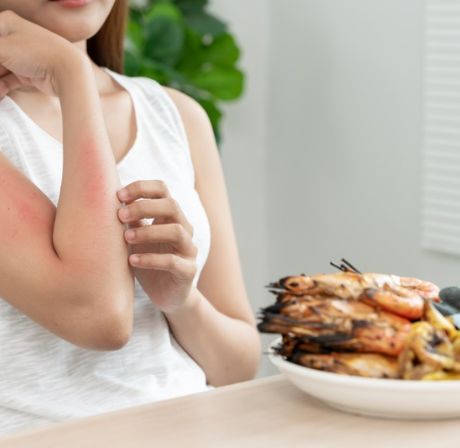
Allergic reactions fall on a spectrum. Mild cases produce hives, itching, or stomach upset that resolve with antihistamines. Severe cases produce anaphylaxis, a whole-body reaction that can close the airway, drop blood pressure, and stop circulation. The difference often comes down to how quickly epinephrine was administered.
Medical documentation can be important evidence in these cases. Emergency department records, ambulance records, the timing of symptoms, and follow-up allergy testing may help connect the suspected allergen exposure to the reaction.
Key Takeaway: Anaphylaxis can escalate to respiratory failure within minutes, making emergency room records critical evidence in a Houston food allergy claim.
Anaphylaxis and Emergency Treatment
Symptoms include throat tightening, swelling of the lips and tongue, wheezing, vomiting, dizziness, and loss of consciousness. Treatment usually begins with an epinephrine auto-injector, followed by transport to an emergency department for airway monitoring, steroids, and observation for a second-phase reaction hours later.
Long-Term Health Complications
A severe reaction can leave heightened sensitivity, new dietary restrictions, or chronic gastrointestinal problems. Many develop anxiety or post-traumatic stress around eating, particularly children. Ongoing costs can include allergist visits, repeat testing, counseling, and a lifetime supply of auto-injectors.
Wrongful Death From Severe Reactions
Fatal reactions occur, most often when epinephrine was unavailable or delayed. Under the Texas Wrongful Death Act, a surviving spouse, children, and parents may bring a claim, and the estate may bring a separate survival action for the pain the person experienced before death.
How Long Do You Have to File a Food Allergy Claim in Texas?
Texas gives most injury victims two years from the date of the reaction to file suit. That deadline comes from Section 16.003 of the Texas Civil Practice and Remedies Code, and a claim filed after it expires is typically dismissed no matter how strong the evidence is. Claims involving children, deaths, or government-run facilities follow different timing rules.
| Type of Claim | Texas Deadline | Key Detail |
|---|---|---|
| Adult personal injury | Two years from the reaction date | Applies to restaurant, manufacturer, and retailer claims |
| Injury to a minor | Usually two years from the child's 18th birthday | Parents may still file sooner for medical expenses |
| Wrongful death | Two years from the date of death | Survival claims follow separate rules |
| Claim against a governmental unit | Written notice as short as six months or less | Applies to school, hospital district, and public facility food service |
Waiting until the deadline approaches carries a practical cost. Restaurant surveillance video is often overwritten within 30 to 90 days, staff turn over, and the food itself is discarded. Early investigation preserves proof that a late filing cannot recover.
Key Takeaway: Texas law typically gives injury victims two years from the reaction date to file suit, but claims involving children, deaths, or public entities may follow different deadlines.
What Compensation Can You Recover for a Food Allergy Injury?
Texas divides recovery into economic damages, backed by receipts, and non-economic damages, compensating for the human cost of injury. Both are available in food allergy cases, with no cap on either category.
Economic Damages
Economic damages cover ambulance charges, emergency room and hospital bills, allergist care, prescriptions and auto-injectors, therapy, and lost wages. Future medical costs and reduced earning capacity can be projected with expert testimony when complications last.
Non-Economic Damages
Non-economic damages compensate for physical pain, mental anguish, disfigurement from prolonged swelling or skin reactions, and anxiety after a near-fatal event. Families of children with anaphylaxis often describe years of food avoidance and sleep disruption.
Wrongful Death Damages
In a fatal case, eligible family members may recover funeral and burial expenses, lost financial support, lost household services, and loss of companionship and society. The estate’s survival claim may add medical bills and pain endured before death.

How Do You Prove Negligence in a Texas Food Allergy Case?
Winning a food allergy claim requires proving duty, breach, causation, and damages. Causation is often contested; defendants may blame another food or unrelated event.
Supporting evidence includes the order ticket showing an allergy note, the package and lot number, kitchen camera footage, employee statements, training manuals and allergen policies, supplier ingredient sheets, and health department inspection history. Medical records tie the exposure to the injury.
An allergist or physician can link the symptom pattern to an IgE-mediated reaction to the allergen, while a food safety consultant can testify about industry standards and where the kitchen or plant fell short.
Key Takeaway: Proving a Texas food allergy claim requires showing the restaurant or manufacturer knew or should have known about the allergen risk and failed to warn the consumer.
What Mistakes Can Hurt Your Food Allergy Claim?
Decisions made in the first days after a reaction often matter more than anything that happens later. Defense attorneys look for gaps in treatment, missing physical evidence, and recorded statements they can use to shift blame onto the diner.
- Waiting too long to seek medical treatment: A gap between the meal and the emergency visit gives the defense room to argue that something else caused your symptoms. Prompt care creates a contemporaneous record of the allergen exposure.
- Not preserving food packaging or receipts: The wrapper, box, lot number, leftover food, and itemized receipt are the physical link between the business and your injury. Once discarded, they rarely can be replaced.
- Speaking with insurance adjusters without counsel: A recorded statement taken while you are on pain medication or still frightened can be used to suggest you never mentioned your allergy.
- Missing the statute of limitations deadline: The two-year period can pass quickly when a claimant is focused on recovery, and courts rarely excuse a late filing.
A quick call before you sign anything or give a statement can protect your claim. Reach The Moudgil Law Firm at (832) 476-3209 to discuss what to preserve and what to say.
Can Your Food Allergy Lawsuit Stay Private?
Much of a food allergy case can stay confidential, though Texas filings start from a presumption of public access. Restaurants and manufacturers often push for confidentiality because publicity about an allergen failure can hurt a brand more than the settlement itself.
A protective order during discovery can restrict how sensitive medical records and internal documents are shared. A pre-trial settlement can include a confidentiality clause, and the agreement itself is never filed with the court. Cases resolved through pre-suit demand or mediation may never generate a public record at all.
Sealing documents already filed is harder: under the Texas Rules of Civil Procedure 76a, a party must show a specific, serious interest outweighing the public’s presumption of openness, and Harris County district courts apply that standard closely.
What Should You Do After a Severe Allergic Reaction?
- Get emergency care first: Use an epinephrine auto-injector if one is available and call 911. Tell the medical team exactly what you ate and when.
- Keep the food and its packaging: If someone with you is able, ask them to bag leftover food, wrappers, and containers, and to photograph the lot number and ingredient panel.
- Save the receipt and order record: Card statements, delivery app confirmations, and itemized tickets show what you ordered and whether an allergy note was entered.
- Write down what you remember when you are able: Note the time, the server’s name or description, what you told staff, and how they responded.
- Collect witness names: Anyone at the table who heard you disclose the allergy can confirm the conversation later.
- Contact an attorney before evidence disappears: Surveillance footage and kitchen records are often destroyed on a short cycle, and a preservation letter can stop that.
| Topic | What Texas Law Provides | Why It Matters to Your Claim |
|---|---|---|
| Type of claim | Negligence against restaurants, products liability under Chapter 82 against manufacturers | Different proof standards apply to each defendant |
| Common causes | Cross-contact, mislabeled packaging, undisclosed menu allergens | Determines which business is responsible |
| Liable parties | Restaurants, manufacturers, distributors, grocers | Multiple insurance policies may apply |
| Filing deadline | Two years under Section 16.003, with exceptions for minors and deaths | A late suit is usually dismissed |
| Compensation | Economic, non-economic, and wrongful death damages | No cap in claims against private businesses |
| Key evidence | Medical records, packaging, receipts, staff statements, training policies | Much of it is destroyed within 30 to 90 days |
Houston Food Allergy Litigation Attorney - The Moudgil Law Firm
Pulkit Moudgil, Esq.
Founder of The Moudgil Law Firm, Pulkit Moudgil, Esq. was inspired to pursue personal injury law after witnessing how a dedicated attorney guided his family through a relative’s car accident. Licensed since 2016 and named a Super Lawyers Rising Stars honoree every year from 2021 through 2026, he focuses his practice on motor vehicle collisions, food allergy negligence, construction accidents, and traumatic brain injury claims.
Drawing on background experience representing both plaintiffs and defendants, Attorney Moudgil brings a distinct strategic edge to every case; anticipating exactly how insurers, restaurant chains, and corporate defense counsel value and contest claims. He provides direct, hands-on representation, personally handling every investigation, negotiation, and filing to ensure his clients are fully supported at every step.
Areas We Serve
The Moudgil Law Firm represents food allergy victims throughout Houston and the surrounding metropolitan area. The office at 3355 W Alabama St Ste 980, Houston, TX 77098 serves clients in Midtown, the Medical Center, Montrose, the Heights, Uptown, Downtown, and Clear Lake.
The firm also handles claims for residents of Sugar Land, Pearland, The Woodlands, Katy, Baytown, Pasadena, Missouri City, Cypress, Spring, and Humble. Cases are filed in the Harris County civil district courts, with matters also handled in Fort Bend, Montgomery, Brazoria, and Galveston County courts depending on where the reaction occurred.
“They are dedicated, knowledgeable, and genuinely care about getting the best possible outcome for their clients.”
“They truly cared about helping me get the best outcome possible and made a stressful situation much easier to handle.”
“Excellent service, the lawyer is very responsible and committed and they deliver on their promises.”
“They drive my case with on time information and pretty good communication. I’ll recommend them 100%”
“Amazing law firm they always go above and beyond to fight for what’s right! Love them down:)”
“Pulkit is the Michael Jordan of attorneys. Highly recommend him! Great to work with and they take care of their clients!”
REACH OUT TO US
Speak With a Houston Food Allergy Litigation Attorney
A reaction that sends you or your child to the emergency room leaves more than medical bills behind. Many families stop eating out entirely, and the business that caused the reaction often responds with an apology and nothing more. You are not required to accept that outcome.
Pulkit Moudgil of The Moudgil Law Firm investigates allergen failures at restaurants, food manufacturers, and grocers across Harris County. He sends preservation letters before surveillance footage is overwritten, obtains kitchen training records and supplier documentation, and works with medical experts to connect the exposure to your injury. The firm handles these cases on a contingency fee basis, so there is no fee unless it recovers compensation for you.
Call The Moudgil Law Firm at (832) 476-3209 for a free case evaluation. The Houston office at 3355 W Alabama St Ste 980 serves injured clients throughout Houston and the surrounding counties, and the sooner you call, the more evidence remains available to prove your claim.
ANSWERS FOR ACCIDENT VICTIMS
Frequently Asked Questions About Food Allergy Litigation in Houston
Can I sue a restaurant in Houston for not disclosing an allergen?
Yes, if the restaurant owed you reasonable care and breached it by serving or misrepresenting food containing an allergen you disclosed. Texas negligence law requires proof that the breach caused your reaction and resulted in damages. Order tickets with allergy notes, staff statements, and emergency records are commonly used to establish those elements.
What if the food that caused my reaction was store-bought and mislabeled?
A mislabeled packaged food may support a products-liability claim against the manufacturer. Chapter 82 defines a products-liability action broadly and can include strict liability, negligence, misrepresentation, breach of warranty, or other theories. The specific claim depends on the labeling defect and how it caused the injury. Keep the package, lot number, and receipt because they can help identify the product and production run.
How much does it cost to hire a Houston food allergy attorney?
The Moudgil Law Firm handles food allergy claims on a contingency fee basis, meaning the fee is a percentage of the recovery and you pay nothing upfront. If there is no recovery, you owe no attorney’s fee. The initial case evaluation is free.
What evidence do I need to prove my food allergy claim?
The strongest cases combine emergency medical records documenting the reaction, the food packaging or leftover food, an itemized receipt or order confirmation, witness statements from people who heard you disclose the allergy, and the business’s internal allergen policies. Surveillance footage and staff statements are also valuable, though they often disappear within 30 to 90 days.
Can I still file a claim if my child had an allergic reaction?
Yes, and the deadline works differently for minors. Texas tolls the limitations period for children in most injury cases, so the two-year clock typically begins on the child’s 18th birthday. Parents may still file earlier to recover the medical expenses they paid, and filing sooner preserves evidence.
What if the restaurant claims I never told them about my allergy?
Texas uses a proportionate responsibility system under Chapter 33, which allows a jury to assign each party a percentage of fault. A claimant found more than 50% responsible cannot recover, so a dispute over whether you disclosed the allergy matters. Receipts with allergy notations, delivery app records, and witnesses at your table can contradict that defense.